
Analyzing Aviator Round History: Reading Stats & Multiplier Patterns
🧠 Key Takeaways:
- Aviator crash results follow a statistical distribution: ~60% of rounds crash <1.5x, while 5x+ only appears ~10% of the time.
- Analyzing Aviator round history offers tactical insights into frequency distributions and cluster behavior—not guaranteed predictions.
- Effective methods include tracking multiplier frequency, session-based averages, and anomaly detection to optimize betting and cash-out strategies.
- RNG ensures rounds are random, so no historical pattern is predictive—but statistical tendencies are useful for risk management.
Introduction: Why Analyze Aviator Crash History?
Understanding Aviator’s round history isn’t about future prediction—it’s about smarter risk decisions.
The popular crash game Aviator, like many RNG-based games, appears chaotic at first glance. But beneath the randomness lie observable statistical trends, particularly in the frequency and clustering of crash multipliers. This guide focuses on Analyzing Aviator Round History: Reading Stats & Multiplier Patterns to equip you with data-driven techniques for smarter betting.
Whether you’re logging sessions for your bankroll strategy or looking to identify multiplier anomalies, this is your definitive reference. For more strategic approaches, see our broader Parent Guide on Aviator Game Strategy.
The Direct Answer: What Does It Mean to Analyze Aviator Round History?
Analyzing Aviator round history means reviewing past crash multipliers to extract useful statistical patterns such as frequency distributions, volatility intervals, and streak clustering.
These insights are not predictive—thanks to Aviator’s provably fair RNG system—but show meaningful tendencies:
- 60% of crashes happen between 1.00x and 1.50x
- Only 10% of all multipliers go above 5x
- High multipliers (50x+) occur approximately once every 100-120 rounds
Tracking these patterns over dozens or hundreds of rounds gives you an edge—not by telling you what will happen next, but by helping you choose when and how to cash out, or adjust your base stake size in alignment with risk.
Deep Dive: How to Analyze Aviator’s Game Crash History & Multiplier Patterns
1. Accessing Game Round History
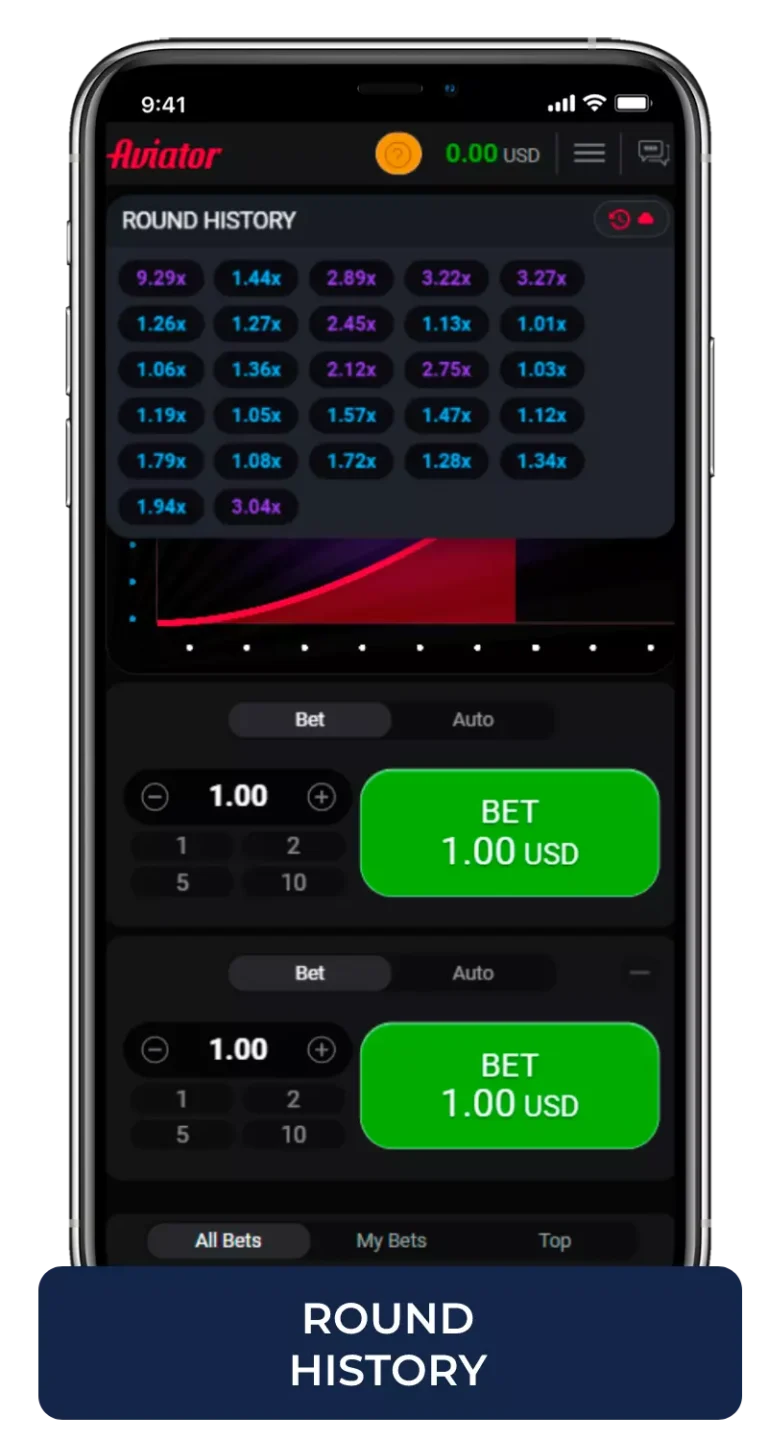
Most Aviator platforms display recent round history in a scrolling sidebar or history tab. Here’s how to begin your data collection:
- Manually record 20–50 recent rounds into a spreadsheet
- Track each multiplier crash value
- Note especially low (<1.5x), medium (1.5x–3.5x), and high (5x+) multipliers
- Use different color indicators for “pink numbers” (early crash) to visualize clusters
Every crash is randomly generated, but patterns of distribution and clustering can emerge in localized timeframes.
2. Multiplier Frequency Distribution (Most Probable Ranges)
What does the Aviator crash curve actually look like?
| Multiplier Range | Frequency Estimate | Strategic Insight |
|---|---|---|
| 1.00x–1.50x | 60% of rounds | High crash risk zone; strong case for early auto-cashout strategies |
| 1.51x–2.99x | 25–30% | Plausible for manual cashout riskers |
| 3.00x–5.00x | 5–10% | Viable for occasional dual-bet strategies |
| 5.01x–10.0x | ~7% | Long tail—rare but impactful wins possible |
| 10x+ | <5% | High variance; best left for high-risk second betting lines |
| 50x+ | ~1 per 100–120 rounds | Record setting; track anomalies separately |
This pattern makes timing and exit discipline essential. Chasing “big wins” every round mathematically ensures long-term losses due to rare frequencies.
3. Recognizing Crash Clusters & “Pink Number” Streaks
The “pink numbers”—multiplier crashes under 1.2x—aren’t random in feel. While they are mathematically independent, Aviator crash frequency often shows streaks such as:
- Multiple <1.20x crashes in 5-round windows
- “Dry patches,” or long no-highs above 5x stretches
- Spikes of 10x, 30x, or even 100x right after pink clusters
Track pink crash clusters using a time-marked sheet. When a pink streak has grown long (4–6 rounds under 1.5x), consider increasing your risk profile moderately—very cautiously—as statistically, the chance of a high multiplier might rebound.
NOT because it’s “due”—RNG says it’s not—but because statistically, high multipliers will emerge in each 100-round cycle.
4. Applying Moving Averages and Trend Analysis
To measure session momentum, calculate:
- 10-round moving average
- 20-round moving average
- Highest multiplier in last 50 rounds
If recent averages trend upward, and you’ve observed fewer <1.2x crashes than expected, it may be an opportunity to shift your cash-out target to 1.6x–2.0x temporarily, always within stake limits.
Tip: Don’t make drastic changes on just 5 rounds of data—a streak may feel long, but data diverges less over larger sample sizes.
Strategic Analysis: Turning Round History into Practical Betting Tactics
Aviator’s long-term RTP is ~97%, but this requires sharp discipline around stake management and knowing what patterns to trust—and what to ignore.
Strategy 1: Flat Bet with Low-Risk Auto-Cashout
- Stake: 1-2% of bankroll per round
- Auto-cashout: 1.30x to 1.40x (based on 60% hit rate)
- Plan: Play 50–100 rounds/session
- Best for: Capital preservation and stable growth
Optimizing for statistically probable low multipliers reduces variance and aligns with the house edge.
Strategy 2: Hybrid Dual Betting with Multiplier Clusters
- Bet 1: 1% bankroll at 1.3x auto-cashout (high likelihood)
- Bet 2: 3–5% bankroll manual cashout targeting 5x–20x
- Use only during “cold patch” pink-number streaks
- Stop loss after two consecutive losses
You exploit both frequent small wins and rare spikes in the same round, using round history to time entry during high volatility windows.
Strategy 3: Controlled Martingale with Crash History Gatekeeping
- Only martingale after confirmed low multiplier streak (>3 rounds <1.5x)
- Limit to 4 Martingale rounds max to minimize bankroll wipeout risk
- Return to base stake after success
Backing this with frequency analysis prevents blind escalation and reduces emotional tilt.
Top Platforms for Aviator Analysis & Play
| Platform | Best For | Bonus Offer | RNG License | Affiliate Link |
|---|---|---|---|---|
| ✅ Partner A (e.g., Mostbet) | Best for Mobile & Apps | 125% Welcome Bonus | Curacao | 🚀 Launch & Win |
| 🟢 Partner C (e.g., 1Win) | Instant Crypto Withdrawals | 500% Deposit Boost | Curacao | 🚀 Launch & Win |
| 🔵 Partner B (e.g., Betway) | Trusted Global Brand | $200 Match Bonus | Global | 🚀 Launch & Win |
FAQ: Aviator Round History & Multiplier Analysis
1. Can analyzing Aviator round history predict future crashes?
No. Aviator is RNG-based, so no historical result can predict a future outcome. However, analysis helps determine statistically common behaviors, like how often low multipliers appear.
2. What are “pink numbers” and why do they matter?
“Pink numbers” are early crash multipliers (<1.2x), often visually marked in red or pink. Clusters of these indicate “high-volatility streaks” and can inform when to change stakes.
3. How often does Aviator hit 100x or more?
Very rarely—on average once every 120–150 rounds. If you go 300+ rounds without a 50x+, note the anomaly—it may indicate a warm-up window statistically.
4. What’s the best multiplier range for consistent wins?
Statistically, 1.3x to 1.5x is the safest zone, with about a 60% hit rate. Going for 2x+ targets raises variance considerably.
5. Are bots or Aviator predictor tools reliable?
No. All predictor bots are scams. They cannot access the hashed provably fair seed used in Aviator’s RNG algorithm. Stick to manual analysis and distribution tracking.
Conclusion: Final Verdict on Analyzing Aviator History
Analyzing Aviator round history is a valuable way to stay disciplined and statistically grounded, not a method for guessing future crashes. Understanding frequency clusters, cash-out norms, and crash timing ranges adds an edge, especially when combined with proper stake sizing and exit planning.
While tools can’t predict the next multiplier in a provably fair RNG game, experienced players benefit from identifying session trends—such as extreme volatility, over-clustering, or long dry stretches—to refine both betting patterns and emotional control.
Aviator is a game of probability, not prophecy. Analyzing round history helps you play that probability with greater precision.
Maximize your edge today:
- 📱 Best Mobile Experience: 🚀 Launch & Win (125% Bonus)
- 💸 Instant Crypto Cashouts: 🚀 Launch & Win (500% Bonus)
- 🌍 Trusted Online Brand: 🚀 Launch & Win ($200 Match)